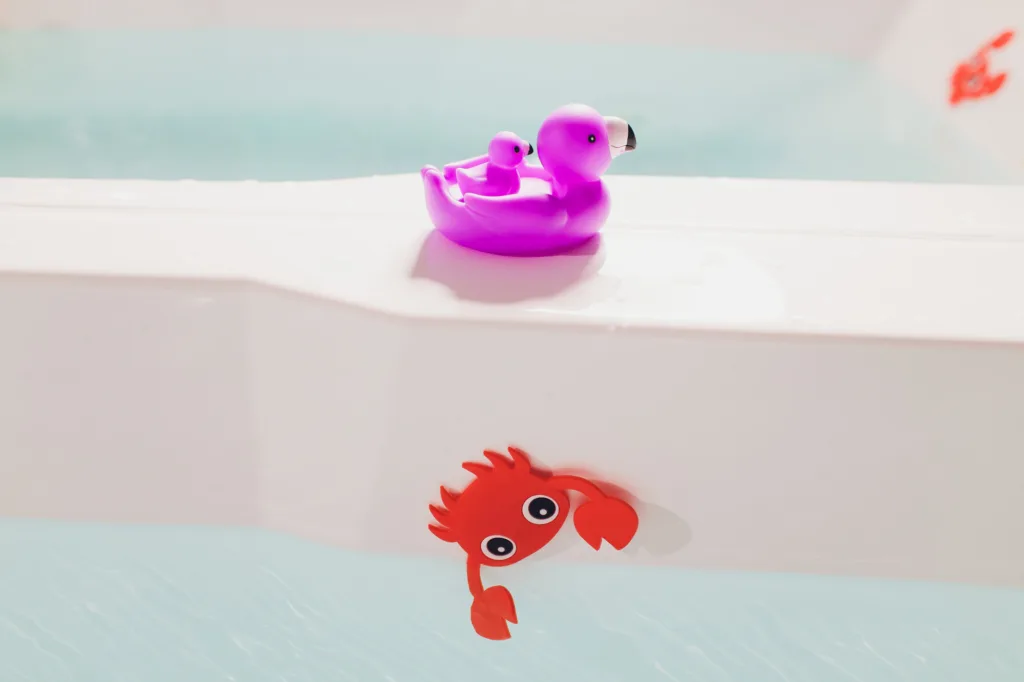
Bathtub Toys and the Montessori Method: Engaging Learning Through Water Play
5 Mins Read
Bath time is a daily ritual for many families, and it can be a great opportunity for young children to engage in play-based learning. But did you know that water play with bathtub toys can actually be a valuable tool in implementing the Montessori method? The Montessori method emphasizes self-directed learning and encourages children to explore the world around them through hands-on experiences. By introducing toys and activities that promote sensory exploration, problem-solving, and creativity, parents can create a fun and engaging learning environment right in their own bathroom. In this article, we will explore the benefits of incorporating bathtub toys into your child’s daily routine and how they can promote early childhood development through the Montessori approach.
Benefits of Water Play in the Montessori Method
Water play is a popular activity that children love, and it is also an excellent way to promote learning and development. The Montessori method recognizes that children learn best through hands-on experiences, and water play is an excellent way to provide these experiences. Water play can help children develop their fine motor skills, hand-eye coordination, and problem-solving abilities. It also provides an opportunity for children to learn about science and math concepts, such as buoyancy, volume, and density.
In addition to promoting physical and cognitive development, water play can also be beneficial for children’s emotional and social development. Bath time can be a relaxing and calming experience for children, which can help them regulate their emotions and reduce stress. It can also be a fun and interactive experience for children and their parents, which can promote bonding and attachment.
Importance of Bathtub Toys in Water Play
Bathtub toys are an essential element of water play, as they can provide children with opportunities for exploration and creativity. Toys like rubber ducks, boats, and cups can be used to teach children about concepts like sinking and floating, cause and effect, and spatial awareness. They can also encourage children to use their imaginations and create their own games and scenarios.
In addition to traditional bathtub toys, there are also Montessori-inspired bathtub toys that can be used to promote sensory exploration and problem-solving. Toys like water wheels, water droppers, and sponges can be used to teach children about cause and effect, gravity, and absorption. These toys can also be used to promote language development, as parents can describe the toys and their functions to their children.
Types of Bathtub Toys for Different Ages
When choosing bathtub toys for your child, it is essential to consider their age and developmental level. For infants and young toddlers, toys that promote sensory exploration, such as soft rubber toys, bath books, and bath mitts, are ideal. As children get older, they can handle more complex toys, such as boats, cups, and water wheels, that promote problem-solving and spatial awareness.
For preschoolers and older children, Montessori-inspired bathtub toys, such as water droppers, sponges, and strainers, can be used to promote scientific exploration and language development. These toys can be used to teach children about the properties of water, such as absorption and surface tension, as well as introduce new vocabulary words.
How to Choose Safe Bathtub Toys
When selecting bathtub toys for your child, it is essential to consider safety. Look for toys that are made from non-toxic materials, such as BPA-free plastic or silicone. Avoid toys that have small parts that can be a choking hazard or toys that can break easily and create sharp edges.
It is also important to consider the age-appropriate nature of the toy. Toys that are too advanced for your child’s developmental level can be frustrating and discouraging, while toys that are too simple can be boring and unengaging.
Ideas for Montessori-Inspired Bathtub Activities
There are many Montessori-inspired bathtub activities that parents can use to promote learning and development. Here are a few ideas to get you started:
Water droppers: Fill a small bowl with water and provide your child with a water dropper. Encourage them to use the dropper to transfer water from the bowl to different cups or containers. This activity promotes fine motor skills, hand-eye coordination, and scientific exploration.
Sponges: Provide your child with different types of sponges and encourage them to explore the textures and shapes. They can use the sponges to create different patterns on the bathtub walls or to clean their toys. This activity promotes sensory exploration, creativity, and independence.
Strainers: Provide your child with a strainer and a variety of small objects, such as beads or buttons. Encourage them to use the strainer to separate the objects by size, color, or shape. This activity promotes problem-solving, scientific exploration, and language development.
Incorporating Language and Math Concepts in Water Play
Water play can be an excellent opportunity to introduce language and math concepts to your child. You can use bathtub toys to teach your child about concepts such as volume, density, and cause and effect. You can also use bath time as an opportunity to read books or sing songs with your child, promoting language development.
For older children, you can introduce simple math concepts, such as counting and measuring, by using cups or containers to pour and transfer water. You can also encourage your child to estimate the volume of water needed to fill different containers, promoting problem-solving and spatial awareness.
Promoting Independence and Problem-Solving Skills through Bathtub Play
The Montessori method emphasizes independence and problem-solving, and bathtub play can be an excellent way to promote these skills. By providing your child with age-appropriate toys and activities, you can encourage them to explore and discover on their own. This can help them develop confidence and independence.
Bathtub play can also promote problem-solving skills, as children are encouraged to use their creativity and imagination to solve challenges and create their own games and scenarios. By providing open-ended toys and activities, parents can encourage children to think critically and develop problem-solving skills.
Making the Most of Small Bathrooms for Water Play
Not all families have large bathrooms with ample space for water play, but that doesn’t mean you can’t incorporate Montessori-inspired bathtub activities into your child’s routine. There are many simple ways to make the most of small bathrooms for water play.
You can use a small plastic bin or tub to create a makeshift bathtub, or you can use the sink or shower as a water source. You can also use suction cups and other types of attachments to create a vertical water play area, maximizing the use of limited space.
Conclusion
Bathtub toys and Montessori-inspired water play activities are an excellent way to promote learning and development in young children. By providing age-appropriate toys and activities, parents can create a fun and engaging learning environment in their own bathroom. Water play promotes physical, cognitive, emotional, and social development, and it can be a relaxing and interactive experience for both parents and children. So, next time you’re preparing for bath time, consider incorporating some Montessori-inspired bathtub toys and activities to make the most of this daily ritual.